
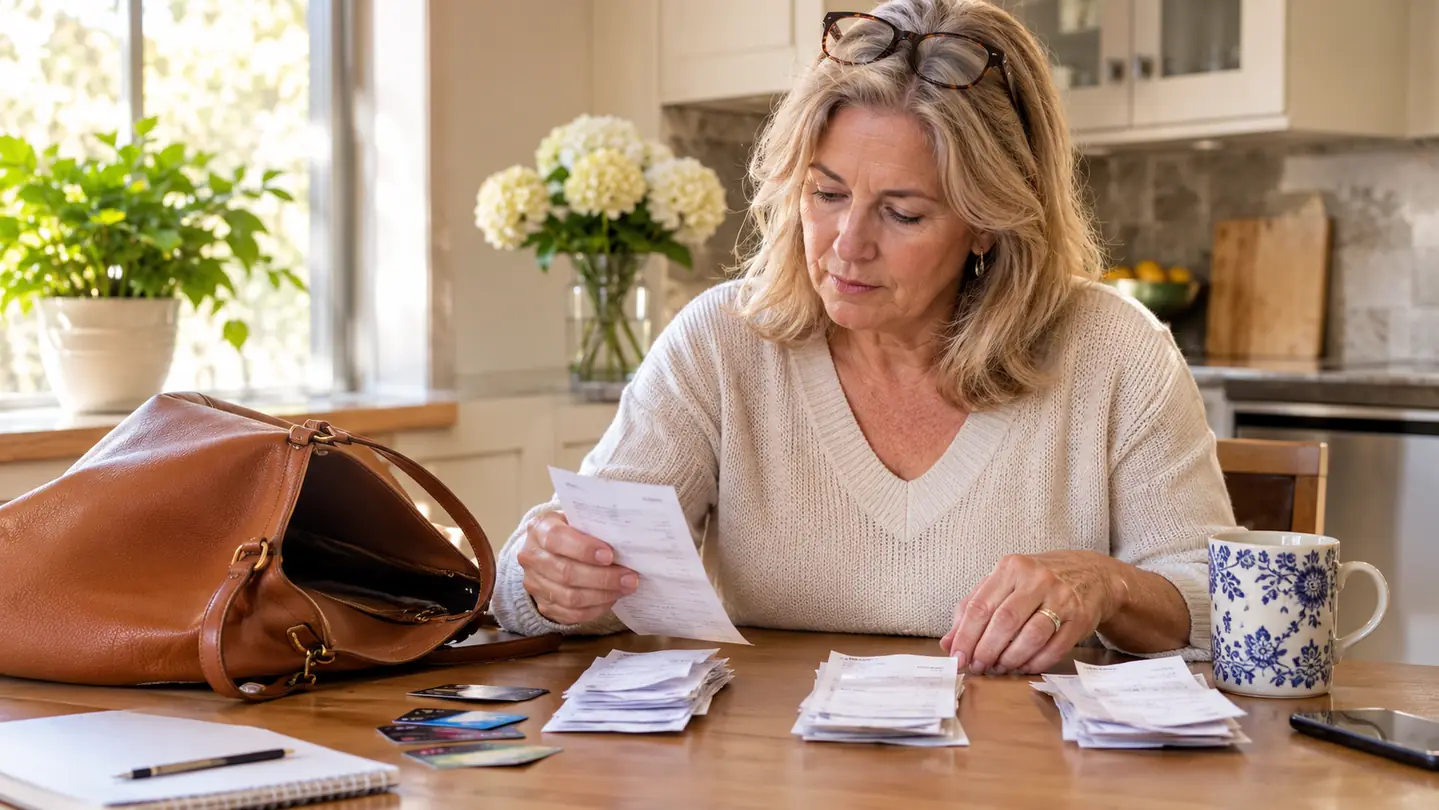
For about fifteen years my purse was a filing cabinet I never filed. I would get to the register at the Harris Teeter, dig past a pair of reading glasses, a church bulletin from three weeks ago, and a lipstick with no cap, and finally come up with a wallet that would not close. The cashier would wait. I would apologize. It happened often enough that I started paying with the card already in my coat pocket so I would not have to open the bag at all.
That is not a wallet problem. It is a system problem, and I say that as a retired middle-school librarian who spent thirty-one years teaching twelve-year-olds how to put things where they belong. What fixed it was not a bigger bag or a stricter personality. It was one flat Fossil clutch wallet, sixteen compartments, and a Sunday evening habit that takes five minutes. The Fossil Logan leather tab clutch is the wallet I use, and the way I load it is the whole of this article.
One wallet, sixteen compartments, and no more digging at the register
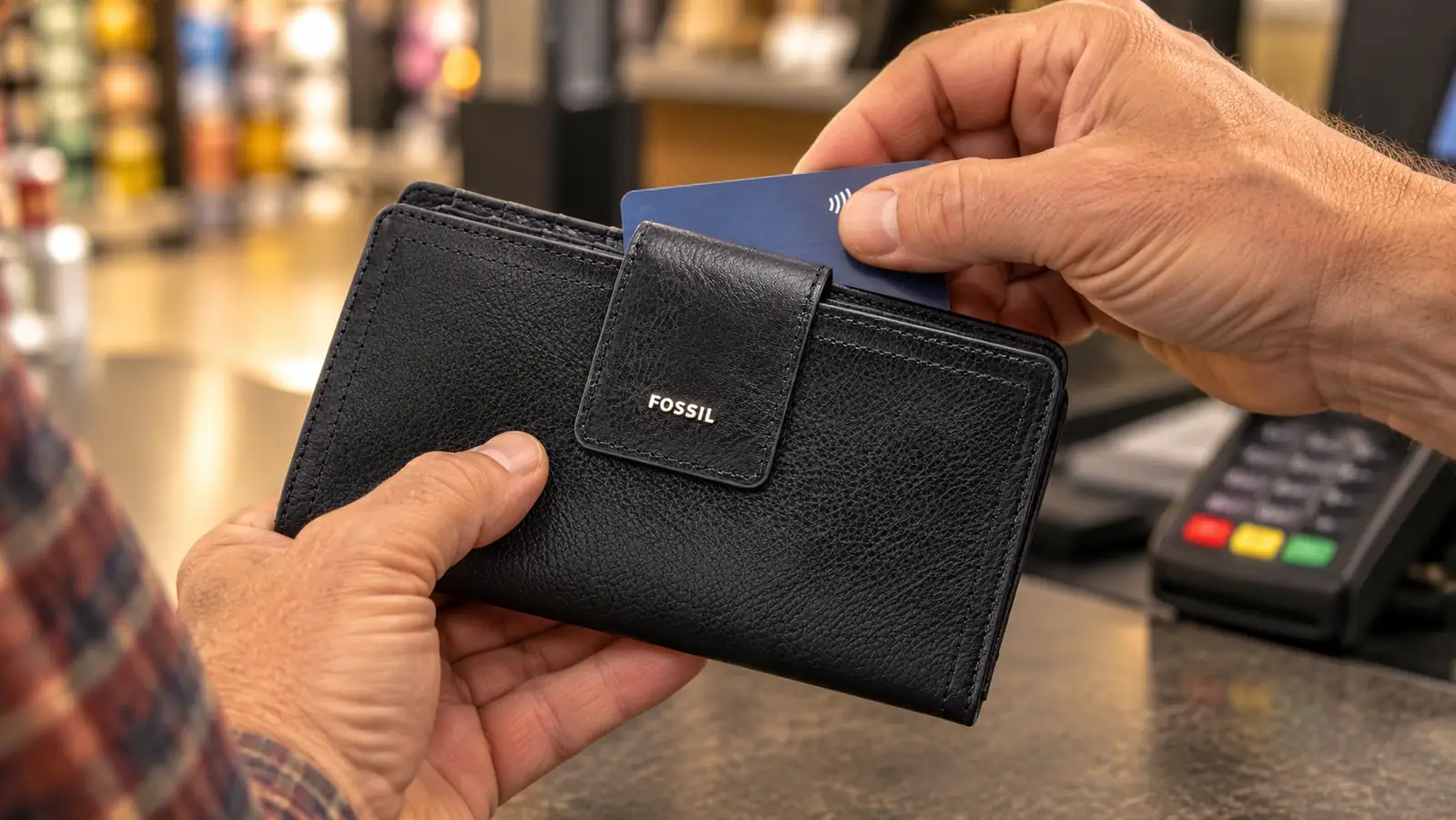
The Fossil Logan tab clutch is the wallet this entire system is built around. Rectangular, flat enough to slip into an interior pocket, with a snap closure and room to give every card and bill its own address.
Amazon Check Today's Price on Amazon →Step 1: Empty the whole thing onto the dining room table
Not the couch, and not the kitchen counter where the mail already lives. The dining room table, with a trash bag on the floor beside you and a shredder if you own one. Tip the bag out completely. Turn it upside down and shake it. Reach into the corners, because that is where the coins and the loose aspirin tablets have been living since spring.
Then sort everything in front of you into three piles. Keep goes back in the bag tonight. File goes into a shoebox or a drawer at home, and I will get to that in a minute. Toss is everything you would not hand to a stranger, which is most of it. Do not make decisions about what you love yet. Just get it visible. Half the problem is that nobody has actually looked at the contents of her handbag in five years.
My own pile was not flattering. Two expired insurance cards from a policy Tom and I changed in 2023. A punch card for a sandwich shop that closed before the pandemic. A library card from the branch that moved. Three pens, none of which wrote. I am telling you this so you know I am not naturally organized about this particular thing, whatever my old students might say.
I tried the obvious thing first, which was a bigger handbag. I bought a wide-mouthed tote in Charlotte at a shop near Kate's apartment, and for about six weeks it held more things more badly. A bigger bag does not organize anything. It just gives the mess somewhere to spread out. What finally worked was making the bag smaller and the wallet flatter, so there was less volume available for junk. You cannot accumulate a year of receipts in a bag that has nowhere to put them.
Step 2: Decide what actually needs to leave the house
This is the step people skip, and it is the only one that matters much. Almost everything in a wallet is a record of a decision you already made once: you chose this pharmacy, this doctor, this insurance plan. You do not need to carry the proof of that decision on your person every day. You need to be able to find it at home, which is a different job.
What I carry now is short enough to say in one breath. My driver's license. One credit card. One debit card. My health insurance card, because I am at the age where I would rather have it and not need it. A backup card I keep for the one pharmacy that does not take the first one. And whatever bills I expect to spend that week, folded flat. That is it. Everything else lives in a small shoebox in the hall closet, filed by category, and I can put my hand on any of it in under a minute.
I revised that list twice. The first version had four credit cards in it, because I had four, and it took one Saturday of standing in a checkout line with a card I had not used since 2019 to convince me that two was enough. The second version had a loyalty card for the grocery store, which I removed after the third time the clerk told me they could look it up by phone number. Each card I took out was a small argument with my own past self, and I won all of them.
The shoebox is the unglamorous hero of this whole arrangement. Library card, store loyalty cards, gift cards, the extra insurance paperwork, the business card of the plumber we liked. Label a few envelopes inside it and you have undone fifteen years of accumulated panic in one afternoon. My filing cabinet finally has files in it.
Step 3: Give every compartment one job and stick to it
Sixteen compartments sounds excessive until you have spent a decade with a wallet that had four. Here is the trick: you do not need sixteen categories. You need about seven, and the extra compartments do the useful work of absorbing the overflow that used to end up loose in the bottom of the bag.
I put the card I use most and my license where my hand falls first, because reaching for them is the thing I do twenty times a week. The insurance card and the backup card sit behind those, since I want them rarely. Bills go flat, facing the same direction, largest in the back, so I can count them without unfolding anything. Receipts get one compartment and one only, and that compartment is emptied every Sunday whether it needs it or not.
The snap closure has turned out to matter more than I expected. It is one motion, one hand, and it holds. I have a stiff right shoulder from an old injury, and fighting a zipper open at a checkout counter while a line builds behind me is the kind of small friction that ruins an afternoon. A snap does not require me to brace the bag against my body and pull. I close it and I am done.
Step 4: Load the bag around the wallet, not the other way around
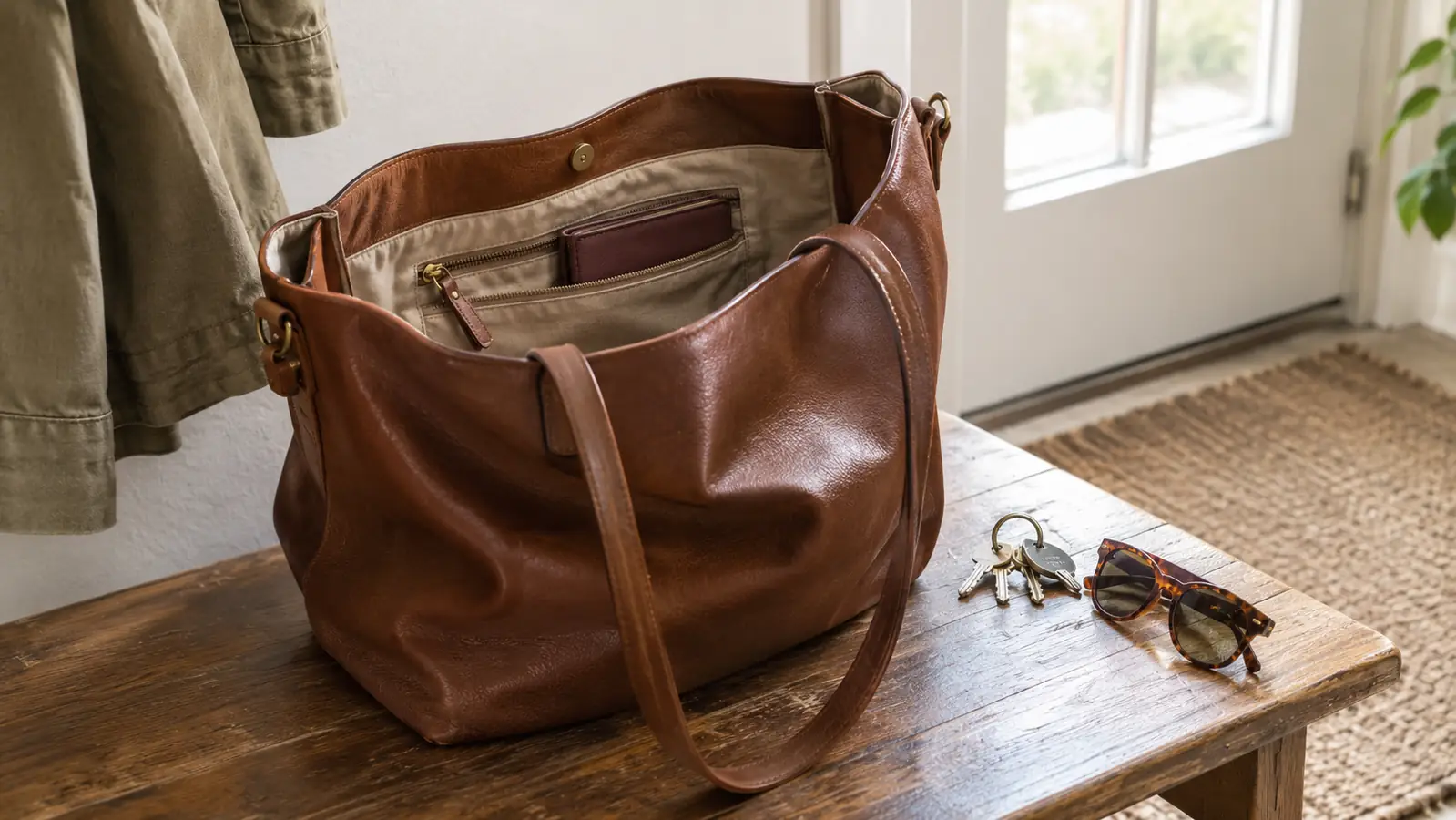
The wallet goes in first, and it goes in the same place every time. For me that is the interior pocket, flat against the side of the bag, not floating loose in the main compartment where it will slide under a scarf and hide. A wallet you have to hunt for has not solved anything. A wallet that lives in a known pocket is found by touch in two seconds, even in a dark car.
When I bought the current bag, a navy shoulder bag with a lined interior, I did the test in the store: wallet in the pocket, hand in after it, out again, three times. The first bag I tried had a pocket that was two inches too shallow and the wallet poked up over the top of it. I put that bag back on the shelf. It is a boring way to shop and it has saved me more grief than any other four minutes I have spent.
Weight is the other reason the order matters. This clutch measures about 6.73 by 3.5 inches and three quarters of an inch deep, and it weighs 4.4 ounces. My old arrangement was a tri-fold, plus a coin purse, plus a small card case, and the three of them together weighed more than my phone. One flat wallet replaced all three. That is the sort of arithmetic that matters at my age and with my shoulder.
Everything else in the bag gets judged against that pocket. The reading glasses go in their case. Keys go on the clip, not loose at the bottom. Nothing else gets to sit in the interior pocket, ever, because the day something else lives there is the day the wallet goes missing. Tom teases me about this the way he teased me about labeling the spice jars. He also asks me where his keys are roughly four times a week.
Step 5: Do a five-minute reset every Sunday evening
Sunday after church, before I sit down with the paper, I empty the receipt compartment, straighten the bills, put any stray card back in its slot, and wipe the outside of the wallet with my thumb. Five minutes. Then it goes back in the bag and the bag goes by the door. That is the whole maintenance plan, and it is the reason the other four steps do not quietly undo themselves by February.
I do the same thing before the drive to Charlotte to see Kate and the grandchildren, because a three-hour car trip with a disorganized bag is its own punishment. A system you only have to touch once a week is a system you will actually keep. Anything that demands daily vigilance gets abandoned by the second week, in my experience, and I have watched a great many earnest resolutions collapse over a school year.
The reset also catches the slow leaks. A receipt from the pharmacy, a business card somebody pressed on me at church, a coupon I meant to use. None of those things is a problem on its own. Left alone for two months, they are the reason a wallet stops closing. Catching them on a Sunday, when I am not in a hurry and the light is good, is the difference between a five-minute job and an afternoon of the Step 1 business all over again.
One honest note: the leather softens with use, and the compartments loosen a little as it does. Mine holds cards snugly now, but I would not expect a brand-new one to feel broken in on the first day. Give it a month of real life before you decide how you feel about it.
What Else Helps
Choose the bag to fit the wallet, not the reverse. A flat rectangular clutch about 6.73 inches long needs an interior pocket that is at least that wide, with a little room to spare. Take the wallet with you when you shop for a handbag if you can. I know that sounds fussy. It takes four minutes and it saves you a year of a wallet wedged in sideways.
Keep the coin situation small. Loose change is what turns a tidy bag back into a gravel pit. I keep a tiny zip pouch for quarters for the parking meter downtown and nothing else. Everything above a dollar goes into a jar on the dresser at the end of the day, and the jar pays for the Christmas wreath.
Finally, buy a wallet you can identify by feel. In a bag, with your hand in it, in a parking lot, at dusk, you want to know immediately that this is the wallet and not a glasses case. The rectangular shape and the tab on this one make that easy. It also matters for security: an RFID blocking clutch means the cards inside are not broadcasting to anyone walking past you in a crowd, and that is worth more to me than any feature I could name.
One flat wallet replaced a tri-fold, a coin purse, and a card case. The three of them together weighed more than my phone. That is the sort of arithmetic that matters at my age and with my shoulder.
Five minutes on Sunday is cheaper than fifteen years of digging at the register
Sixteen compartments, a snap closure, and a flat rectangular profile that fits an interior pocket. If your purse is currently a filing cabinet you never filed, start here.
Amazon See Today's Price on the Fossil Logan Clutch →