

By two o'clock most afternoons my right shoulder was telling me something I did not want to hear. It is an old injury and it lets me know when I am asking too much of it. The trouble was that I could not work out what I was asking it to do. I carried one bag, a modest bag, and yet every afternoon there it was again, that dull ache. When I finally traded down to the APHISON leather crossbody purse, I found out the problem was never the bag. It was what I had been putting inside it.
One Saturday morning I turned the old bag upside down on the kitchen table, the way I used to empty an overstuffed book cart at the school library. Out came two pairs of reading glasses. A checkbook I have not written in since 2019. Four pens, three of which did not write. A compact, a flattened packet of tissues, a spare set of house keys, a stack of receipts, and a jar of hand cream I had been moving from bag to bag for two years without once opening the lid. None of it was heavy on its own. Together it came to something close to two pounds, and I had been hanging all of it off one sore shoulder since breakfast. Here is what the sorting taught me, and what I would tell you to do if your bag has started to feel like a chore.
The Bag That Made Me Stop Carrying Two Pounds of Nothing
The APHISON crossbody is a leather sling with four compartments, an adjustable strap and a listed capacity of 11.9 inches. It is small enough that it will not hold everything you own, which turned out to be the entire point.
Amazon Check Today's Price on Amazon →Step 1: Empty It Out on a Table and Be Honest About the Piles
Do this on a table with good light, not on your lap in the car with the engine running. Turn the bag upside down, then sweep the bottom corners with your hand, because that is where the small things live: the bobby pins, the broken earring backs, the receipts that have fused to the lining. Then sort everything into three piles. What you used this week. What you used this year. What you have been carrying because you forgot it was in there.
I did mine on a Tuesday morning after Tom left for his workshop, so I would not have an audience. It took about twenty minutes, and most of that was scraping a sticky patch off the lining where a cough drop had melted sometime last summer. Use the edge of an old credit card for that. Do not use a wet cloth, because it pushes the stickiness deeper into the seam and you will smell it every time you open the bag. When you finish, put the keepers in a bowl and count them.
Be harder on the second pile than feels polite. My checkbook went into the hall drawer. The spare keys went on Tom's hook by the door. The third pile is easy, because it is all trash: receipts you will never claim, a pen that leaks, a hair tie that has lost its stretch, a cough drop that has been through a washing machine cycle. Sort it once, properly, and you will not have to think about it again for months.
Most of the women I know land between nine and fifteen items, and they are surprised, because it did not feel like that much going in. You are aiming for seven or fewer. The next step explains why seven is the number I landed on and not, say, ten or twelve.
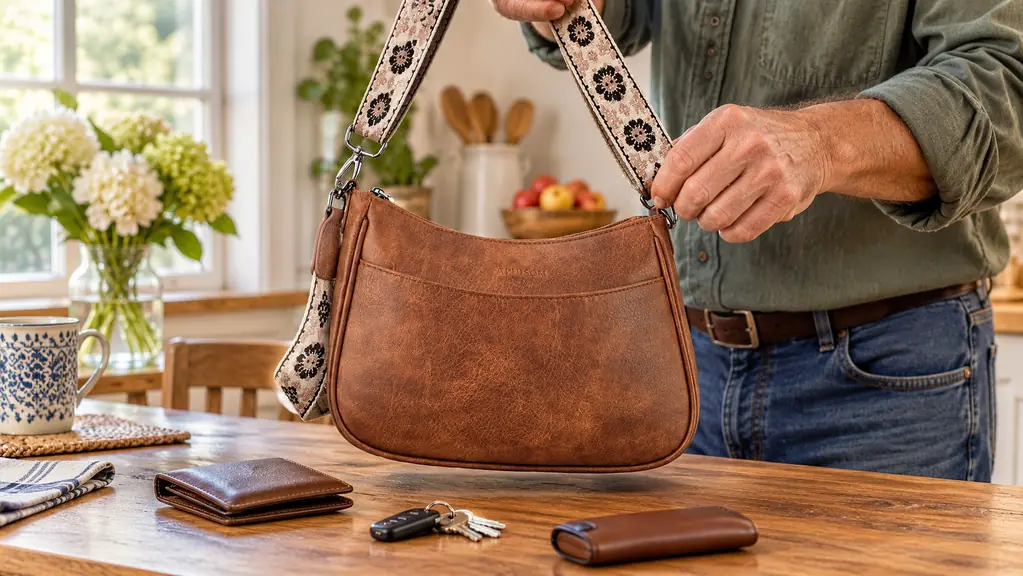
Step 2: Set a Weight Ceiling You Can Feel by Two in the Afternoon
I keep the whole bag, strap and all, under about a pound and a half, which means the contents cannot run past a pound. Weigh yours once on the kitchen scale if you doubt that it is heavy. I did, and I was off by nearly double. A bag that feels perfectly fine at eight in the morning can feel like a sack of flour by three, and your shoulder does not send you an itemized bill until much later.
Weight matters more in a crossbody than in a tote because of where it sits. A tote hangs off one shoulder and pulls straight down. A crossbody spreads what it carries across your back and chest, which is easier on the shoulder, but only if the strap is a sensible width and sits where it ought to. My right shoulder notices a bad strap faster than it notices a bad weight, and it has firm opinions about both.
I tested this the way I test most things, which is badly at first. For a week I simply moved the same contents into the crossbody and wondered why nothing improved, because I had changed the container and not the cargo. The morning walk downtown still ended with me rolling my shoulder at the corner of Patton Avenue. The strap was fine. The bag was fine. I was still carrying two pounds of decisions I had not made.
The bag itself is not the load. The APHISON weighs about seven ounces empty, less than a paperback. When I did the arithmetic I realized nearly all of the two pounds had been mine: my choices, my just-in-case items, my refusal to make a decision at the kitchen counter. A small bag forces that decision at home, in the calm of your own kitchen, instead of on the sidewalk outside the post office.
Step 3: Build a Seven-Item Core and Let the Pockets Do the Rest
Seven items, chosen once, checked on Sunday night. Mine are a wallet, keys, phone, reading glasses in a thin case, lip balm, a folded cloth, and one pen. That is the whole list. No checkbook, no jar of hand cream, no second pair of glasses. The hand cream lives in the car now and the spare glasses live in the desk drawer, which is where I actually needed them. Nothing has been lost by leaving them behind.
I wrote my seven on the back of an envelope and taped it inside the closet door, which sounds like exactly the sort of thing a retired librarian would do, because it is. It stayed there about six weeks, until I stopped needing to look. If you are starting out, write yours down. The list is the method. The bag is only the container the list lives in, and a list you can see is harder to argue with at seven in the morning.
The bag does a good deal of the organizing if you let it. The APHISON is a sling silhouette in leather with an adjustable strap, four compartments and a zippered pocket. That is enough separation to keep the phone from tangling with the keys, and not so much that you forget which pocket you used. Keys in the zipper, wallet flat against the back, glasses case upright, lip balm in the small pocket. Once a thing has a home, you stop patting yourself down at the register.
I have owned a bag with so many slip pockets that I once spent two full minutes at a restaurant counter hunting for my own card while a line built up behind me. Four compartments is the sensible middle. It also means you can reach for something without looking, which matters when you are holding a grandchild's hand in a parking lot.
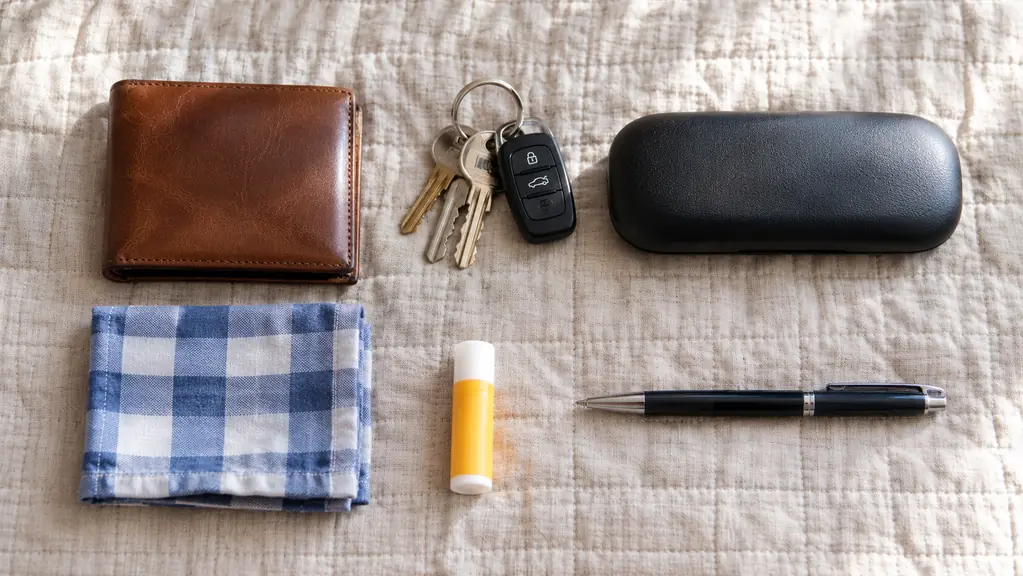
Step 4: Fit the Strap Before You Walk Out the Door
Adjust the strap while you are wearing the coat or sweater you will actually wear that day. A strap set for a summer blouse will ride wrong over a winter cardigan, and then you will blame the bag for something that took four seconds to fix. Do it in the hall mirror with your coat on, not in the parking lot with your arms full.
The APHISON strap adjusts, which sounds like a small feature until you have owned a bag that does not. I wear mine so the bag sits at my hip, just above it, with my hand resting on the closure. That spot keeps it out of the way when I bend down and keeps it flat against me when I walk downtown in the morning. It also means the strap is not sawing at my neck, which is what sent two earlier crossbodies to the donation box.
The first crossbody I bought, years back, had a strap fixed at one length that put the bag squarely on my hip bone. By the end of a choir rehearsal I had a red mark straight through my blouse. I gave that one to Kate. She was twenty-six then and could carry anything. The second had a strap so thin it cut into the fold of my neck by the time I reached the end of the block, and that one went to the church rummage sale without regret.
If your shoulder argues, switch sides partway through the day. I do the walk downtown with the strap on my left, then change it for the walk home. It sounds fussy to explain out loud. It is the single change that let me keep carrying a crossbody after years of giving up on them and going back to a tote that made everything worse.
Step 5: Give the Switch a Month Before You Decide It Did Not Work
Cleaning out a bag is a Saturday project. Keeping it light is a habit, and habits need a place on the calendar. Sunday after supper, five minutes, dump and reset. Put the seven items back, throw out the receipts, take out whatever wandered in during the week. That is the entire system, and it costs about as much attention as watering a houseplant.
The first two weeks are the hard ones, because the small bag will not have a nail file in it the one time you want one. Write down what you reached for and did not have. I reached for a pen twice and a tissue once, and both times the answer was a five-second walk to a drawer, not a heavier bag. By the third week I had stopped keeping the list.
After a month, pay attention to your afternoons instead of your bag. Mine look different. By two o'clock I am not shifting a strap or rubbing my shoulder, and I am not rearranging a purse on the passenger seat before I drive to Charlotte to see Kate. The bag has stopped being a small, steady complaint and gone back to being a thing I put on with my shoes.
What Else Helps
Keep a small tray or bowl by the door. Everything that goes into the bag lives there when it is not in the bag: keys, wallet, glasses case. A bag stays light when the seven items never get a chance to pile up on the hall table with the mail and the dry cleaning slips.
Buy the wallet to fit the bag, not the other way around. A long checkbook wallet will fill a small crossbody by itself. A card case or a short wallet takes a third of the space, closes without a fight, and is easier to hold in one hand at the grocery store when you are also holding a basket.
On the days you genuinely need more, carry a second bag rather than a bigger one. I keep a folded tote in the car for library books and groceries, and the crossbody stays on me with the wallet and keys. Two light things carried honestly beat one heavy thing carried badly, and you will not spend the afternoon shifting a strap from one shoulder to the other.
And look after the leather. A wipe with a soft dry cloth and a little conditioner along the seams twice a year keeps a bag looking like something you chose on purpose instead of something you settled for at a clearance table.
Nearly all of that two pounds was mine: my choices, my just-in-case items, my refusal to make a decision at the kitchen counter.
Enough Bag for Errands, Which Is Not the Same as a Big Bag
The APHISON leather crossbody holds a wallet, phone, keys and glasses across four compartments, rides across the body instead of pulling on one shoulder, and weighs about seven ounces before you put anything in it.
Amazon Check Today's Price on Amazon →